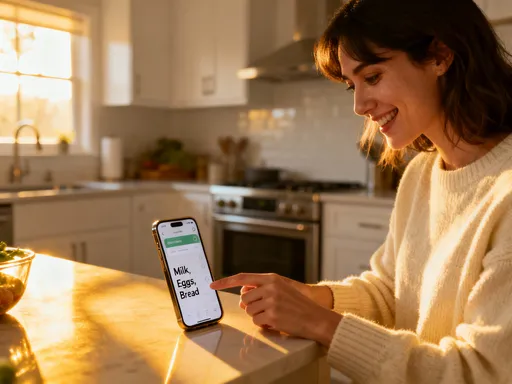
Tired of chaotic grocery trips? This app made my shopping effortless
Ever stood in the supermarket aisle, staring blankly at your phone, forgetting half the items on your list? I’ve been there—overwhelmed, frustrated, and always forgetting the one thing we actually needed. It wasn’t just about groceries; it was the mental clutter, the wasted time, the repeated trips. Then I found a simple app that transformed my entire routine. No tech jargon, no steep learning curve—just real relief. If you're tired of disorganized shopping draining your energy, this change might be exactly what you need.
The Daily Chaos of Traditional Shopping
Let me paint a familiar picture: it’s 6 p.m., you’re rushing home from work, the kids are hungry, and someone yells, “We’re out of milk!” Again. You promised yourself you’d go yesterday, but then the dog needed a vet call, the laundry overflowed, and dinner took longer than expected. So here you are, pulling into the store parking lot, trying to remember what was on that sticky note that probably fell into the abyss of your purse. You walk in, grab a cart, and start wandering—cereal? Did we need cereal? Wait, was it toilet paper or paper towels? By the time you check out, you’ve overspent, bought duplicates, and still forgotten the almond butter your daughter needs for her school snacks.
Sound familiar? This wasn’t just my story—it was my weekly reality. The truth is, grocery shopping seems simple, but when it’s unstructured, it becomes a hidden source of stress. It’s not just about the items; it’s about the mental load. Every time I walked into that store, I carried the weight of remembering everything for everyone. And when I failed—again—I felt like I’d let my family down. It wasn’t just inconvenient; it chipped away at my confidence. I started dreading the whole process, and that dread spilled into other parts of my day. I’d snap at the kids, feel guilty for not being more organized, and wonder why something so basic felt so hard.
And I know I’m not alone. So many of us are juggling work, family, homes, and personal goals, and we don’t need one more thing that makes us feel scattered. The real cost of chaotic shopping isn’t just wasted money or food—it’s the emotional toll. It’s the little voice that says, “You can’t even get this right.” But here’s what I’ve learned: it’s not about us failing. It’s about the tools we’re using failing us. And once I realized that, everything changed.
Discovering a Simpler Way: My First Encounter with the App
It all started on a rainy Sunday afternoon. I opened the fridge to start dinner and realized—again—how bare it was. Just a sad container of leftover pasta and half a lemon. I sighed, pulled out my phone, and searched for “easy grocery list app.” I wasn’t looking for anything fancy. No AI meal planners, no subscription services, no complicated interfaces. I just wanted something that would help me remember what we needed—without the stress.
That’s when I found it: a simple, clean app that my friend Sarah had mentioned months ago. I’d ignored it then, thinking, “Another app? Really?” But this time, I was desperate enough to try. I downloaded it, opened it, and was surprised by how calm it felt. No pop-ups, no tutorials, no pressure. Just a blank list and a friendly “What do you need?” at the top. I started typing: milk, bread, bananas, dish soap. Simple. Obvious. But something about seeing it all in one place—neat, clear, digital—felt different.
The first week was messy. I forgot to check the list before heading to the store. My husband added “chips” without specifying which kind, so I came home with barbecue instead of sour cream and onion (which, honestly, wasn’t the end of the world). But here’s what surprised me: I didn’t give up. Because the app made it so easy to fix things. I could edit the list in real time, mark items as bought, and even archive old lists for reference. There was no judgment, no frustration—just progress. And after just a few uses, I started to feel something I hadn’t in a long time: in control.
It wasn’t perfect, but it was working. And that was enough to keep me going.
How the App Fits Seamlessly into Real Life
What I love most about this app isn’t what it does—it’s how it does it. It doesn’t demand attention. It doesn’t beep at me or send ten reminders a day. Instead, it works quietly in the background, like a good helper who knows when to step in and when to stay out of the way. One of the first features I fell in love with was the shared list. I invited my husband, and within minutes, he added “toilet paper” and “dog treats.” Later that evening, as I was folding laundry, I heard a soft chime—my phone. He’d added “olive oil” while cooking. No text, no call, no interruption. Just a quiet update that kept us both on the same page.
Then there’s the voice input. I don’t know about you, but my hands are usually full—holding a baby, stirring a pot, wiping a counter. The ability to say, “Add eggs and spinach,” while I’m in the middle of something else has been a game-changer. It feels natural, like talking to a friend. And the app gets smarter over time. It learns what I buy often and suggests items before I even think of them. “Need more coffee?” it asks gently. And nine times out of ten, yes—I do.
Another subtle but powerful feature is the automatic sorting. When I head to the store, the list reorganizes itself based on the store layout—produce first, then dairy, then pantry items. No more backtracking or crisscrossing the aisles. It saves time, yes, but more importantly, it reduces decision fatigue. I don’t have to think about the order—I just follow the list. It’s like having a personal shopping assistant who knows the store better than I do.
And the best part? It doesn’t feel like technology is taking over. It feels like technology is finally catching up to real life.
More Than a List: Regaining Mental Space
Here’s something I didn’t expect: using this app didn’t just change my shopping—it changed my mind. I started noticing that I wasn’t constantly mentally scanning my list throughout the day. I wasn’t waking up at 3 a.m. wondering if we had enough laundry detergent. That low-level hum of anxiety—the one that used to follow me like a shadow—began to fade. I had more mental space. And that space? I filled it with things that mattered—reading to my kids, planning a weekend hike, even just sitting quietly with a cup of tea.
Psychologists call it “cognitive offloading”—the idea that when we trust an external system to remember things for us, our brain can relax. And that’s exactly what happened. I stopped feeling like I had to be the family’s memory keeper. The app held the details, so I could focus on being present. I wasn’t less responsible—I was more effective. And that shift changed the tone of our home. Fewer “I told you we were out of butter” moments. Less frustration. More cooperation.
I remember one evening, my daughter asked, “Mom, why are you smiling so much lately?” I hadn’t even realized I was. But when I thought about it, I knew why. I wasn’t carrying the same weight. I wasn’t starting each day already behind. And that lightness—it showed. It wasn’t just about groceries. It was about peace. And isn’t that what we all want? To feel calm, capable, and in sync with our lives?
This app didn’t give me more hours in the day. But it gave me something just as valuable: mental clarity. And from that clarity, everything else began to flow more easily.
Small Changes, Big Ripple Effects
Once my shopping was under control, other parts of my life started to align too. I began meal planning—not in a rigid, Pinterest-perfect way, but in a simple, practical one. On Sunday nights, I’d open the app, look at our list, and think, “What can we make with these ingredients?” I started trying new recipes, confident that I wouldn’t get to step three and realize I was missing garlic or soy sauce. That small confidence boost made me more adventurous in the kitchen, and my family noticed. “This curry is amazing!” my son said one night. “Can we have it again?”
And because I was buying only what we needed, food waste dropped. No more wilting spinach in the back of the fridge. No more mystery containers I forgot about until they grew science experiments. I started checking the list before each trip, adjusting based on what we already had. That meant fewer impulse buys—especially in the snack aisle, where I used to grab things “just in case.” Now, I buy with purpose.
The financial impact surprised me. I wasn’t tracking every dollar, but I noticed my grocery bills were more predictable. No more $150 emergency runs because we ran out of everything at once. Instead, I was spending steadily, buying in bulk when it made sense, and using coupons linked directly to the app. Over time, it added up. Not because I was trying to save—I was just being more intentional.
And that intentionality spilled over into other areas. I started using the app for more than groceries—school supplies, birthday gifts, even home repair items. It became a hub for household management. But the biggest change was internal. I felt more capable. More like the kind of woman I wanted to be—organized, calm, in charge of my home without being overwhelmed by it.
Making It Work for You: Simple Tips I Learned
If you’re thinking about trying a tool like this, I’ll be honest: it won’t work perfectly overnight. But it doesn’t have to. The key is consistency, not perfection. Here are a few things that helped me make it stick. First, I set a routine. Every morning, while I drink my coffee, I glance at the list. I check what’s running low, delete what we’ve used, and add anything new. It takes less than five minutes, but it keeps me connected to the system.
Second, I use emojis. Sounds silly, but it works. A banana 🍌, a cart 🛒, a heart ❤️ next to my daughter’s favorite yogurt. It makes the list more visual, more fun. My kids even recognize the symbols now. “Mom, you forgot the milk carton!” they’ll say, pointing at the app on my phone. It’s become a little family game.
Third, I schedule a weekly review. Every Sunday, I sit down for ten minutes and look at the past week’s list. What did we use? What didn’t we need? It helps me spot patterns—like how we go through more bread on weekends—and plan accordingly. It’s not a chore; it’s a quiet moment of reflection.
And finally, I remind myself: this is supposed to help me, not stress me. If I forget to check the list before shopping, I don’t beat myself up. I just add the items later. If my husband adds “snacks” without details, I text him, “Which kind?” It’s flexible. It’s forgiving. And that’s why it works.
A Calmer, More Connected Household
Now, months later, this app isn’t just a tool—it’s part of our family rhythm. It’s there when my daughter texts me a photo of an ingredient she needs for a school project. It’s there when my husband adds “birthday cake supplies” the night before our son’s party. It’s there when I’m planning a slow cooker meal and want to make sure I have everything before I start.
But more than that, it’s taught me something important: technology doesn’t have to complicate our lives. When chosen with care, it can simplify them. It can give us back time, reduce stress, and help us show up more fully for the people we love. I’m not saying this app solved all my problems. But it solved one real, daily frustration—and in doing so, it created space for more joy, more connection, more peace.
I used to think being a good homemaker meant doing everything in my head, remembering every detail, never dropping the ball. Now I know that being a good homemaker means using every resource available—including smart, simple tools—to care for my family with less strain and more ease. And that, to me, is true strength.
If you’re tired of the grocery grind, if you’re carrying the weight of remembering everything, I invite you to try something new. Not because you’re failing, but because you deserve support. You deserve to feel calm, capable, and in control. And sometimes, that starts with something as simple as a better list. One tap. One change. And suddenly, life feels a little lighter.