From Weekend Worry to Worry-Free: How Vehicle Safety Monitoring Changed Our Family Drives
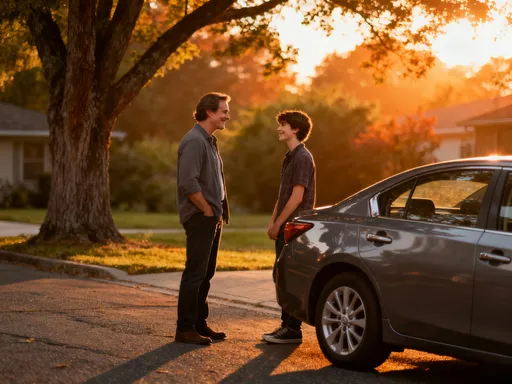
You know that knot in your stomach every weekend when your teen takes the car? I did too—until we started using vehicle safety monitoring. It wasn’t about control, but care. No more guessing if they’re speeding or distracted. Just real-time peace of mind. What began as a nervous experiment turned into a game-changer for our family’s routine. Now, weekend trips feel lighter, safer, and strangely more connected. That tightness in my chest when the keys jingled? It’s gone. Not because I stopped caring, but because I finally found a way to care smarter. And if you’ve ever felt that quiet ache of worry as a loved one pulls out of the driveway, this might just be the change your family needs too.
The Weekend Anxiety No Parent Talks About
Every weekend, the same ritual plays out in homes across the country. The kids bundle up, grab snacks, maybe invite a friend along. The car keys appear. The engine starts. And then—there it is. That little twist in your gut. You smile and wave, but inside, your mind races: Are they going to be careful? Did they check the tire pressure? Will they be tempted to text while driving? Will someone else on the road make a bad decision?
I used to bury those thoughts. I thought good parents just trusted their kids and let go. But the truth is, letting go doesn’t mean checking out. And pretending I wasn’t worried didn’t make me a stronger mom—it just made me a quieter one. The anxiety didn’t disappear. It waited in the background, surfacing every time my phone stayed silent too long or when a local news alert popped up about a crash on the highway.
What I’ve come to realize is that this fear isn’t a sign of weakness or lack of trust. It’s a sign of love. We care so deeply that the idea of something happening—even if it’s unlikely—feels unbearable. And yet, most of us don’t talk about it. We smile, we wave, we say ‘drive safe,’ and then we go about our day, carrying that invisible weight. But what if we didn’t have to carry it alone? What if there was a way to stay connected, not to control, but to comfort?
The Misconception: Monitoring Equals Mistrust
When I first heard about vehicle safety monitoring, my instinct was to reject it. It sounded like spying. Like installing a digital chaperone. I worried it would send the message: ‘I don’t trust you.’ And honestly, I didn’t want that tension in our relationship. My daughter and I had worked hard to build open communication. The last thing I wanted was to undermine it with something that felt invasive.
Then one evening, she asked me a simple question: ‘Wouldn’t you want to know if something happened? Like, if I skidded or had to brake suddenly?’ I paused. Of course I would. In fact, I’d already imagined those scenarios a hundred times. Why wouldn’t I want to know? And that’s when it hit me—this wasn’t about suspicion. It was about awareness. It wasn’t about watching her every move. It was about being there, even when I couldn’t be.
Think of it like wearing a seatbelt. No one thinks you don’t trust your car because you buckle up. Or that you’re paranoid for having car insurance. These are normal, responsible choices. Vehicle monitoring is just another layer of protection—one that gives you information instead of leaving you in the dark. It’s not about tracking miles or judging routes. It’s about knowing that if something unexpected happens, you’re not the last to know.
Once we started talking about it openly, my daughter actually felt more secure. She said, ‘It’s kind of like having you in the backseat, but without you actually being there and nagging me.’ We both laughed. But there was truth in it. It wasn’t surveillance. It was support. And that shift in mindset—seeing it as care, not control—changed everything.
How It Works—Without the Tech Jargon
I’ll be honest—I’m not a tech person. I still ask my son how to pair my earbuds. So when I first looked into vehicle monitoring, I was intimidated. I pictured complicated dashboards, confusing settings, alerts for things I didn’t understand. But what I found surprised me. Most of these systems are designed for people like me. Parents. Grandparents. Anyone who wants peace of mind without becoming a software expert.
Here’s how it works in real life: We use a small device that plugs into the car’s diagnostic port—usually under the steering wheel. It takes two minutes to install. Then, you download a simple app on your phone. That’s it. No wires, no drilling, no tech degree required.
Once it’s set up, the app shows basic but powerful information. I can see where the car is in real time—great for when my son runs late from soccer practice. I get a notification if he speeds—though we’ve agreed on a reasonable limit, like 15 mph over the posted speed. And if there’s sudden braking, sharp turning, or a potential collision, I get an instant alert. Not a constant stream of data—just the things that matter.
The beauty is in the simplicity. I don’t check the app constantly. I don’t track every trip. But knowing it’s there—like a smoke detector for the road—makes a difference. And the best part? It works both ways. My son can see his own driving scores, like how smooth his braking was or how many hard accelerations he had. It’s not about perfection. It’s about progress. And for him, it’s become a quiet motivator to drive better.
A Rainy Saturday That Changed Everything
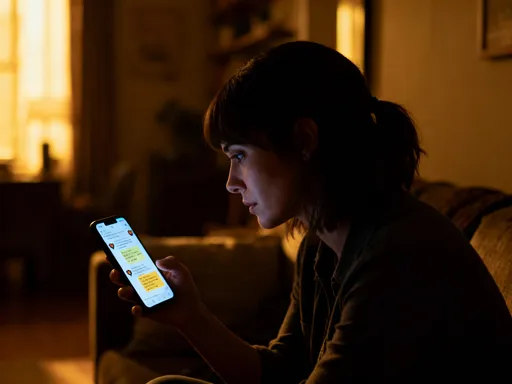
It was a gray, drizzly afternoon—the kind where the roads get slick before you even notice. My son was driving back from a friend’s house, just a 15-minute trip. I was folding laundry when my phone buzzed. Not a call. Not a text. A safety alert: ‘Hard braking detected.’
My heart jumped. But instead of panic, I took a breath. The app showed his location, and he was still moving. I called him calmly. ‘Hey, everything okay? I got an alert.’ He sounded a little shaken but fine. ‘Yeah, Mom. A car cut me off, and I had to slam the brakes. Water everywhere. Scared me, but I’m okay.’
In the past, I might not have known. He might have brushed it off later, or worse, not mentioned it at all. But this time, we talked about it right away. Not to scold, not to lecture—but to connect. ‘I’m glad you’re safe,’ I said. ‘That must have been scary.’ And we talked about what he could do next time—maybe increase following distance in the rain, or turn on hazard lights if he needs to slow down fast.
That moment was a turning point. The technology didn’t prevent the near-miss, but it gave us something just as important: awareness and the chance to respond. It turned a potential ‘what if’ into a real conversation. And it reminded me that safety isn’t just about avoiding accidents. It’s about learning, growing, and supporting each other through the close calls—the ones that don’t make the news but stay with us.
Since then, I’ve realized that these alerts aren’t red flags. They’re yellow lights. Gentle reminders that driving is complex, and even good drivers face challenges. And knowing that we’re in it together—watching out, not watching over—has brought a new kind of calm to our home.
More Than Safety: Building Responsible Drivers
One of the most unexpected benefits has been how it’s shaped my son’s attitude toward driving. At first, he was curious. Then, he got competitive—with himself. ‘Mom, I only had one harsh brake this week!’ he said one evening, showing me his weekly report. ‘And I didn’t speed once on the highway.’
I didn’t ask for that. I didn’t reward it. But the feedback loop of seeing his own data—simple, clear, non-judgmental—gave him a sense of ownership. It wasn’t me telling him to drive better. It was him choosing to improve. And that makes all the difference.
Driving is one of the first big responsibilities teens take on. It’s freedom, yes, but also risk. And without feedback, it’s easy to develop bad habits. We don’t get real-time reports on how we’re doing—unless we have a system like this. Now, my son checks his score like someone might check their step count. It’s not about being perfect. It’s about being aware.
And that awareness is shaping more than just his driving. It’s teaching him accountability. He knows I can see the data, but I don’t hover. He also knows that if something happens, we’ll talk about it—not punish, but learn. That trust has made him more open, not less. Last week, he told me, ‘I actually like knowing you’re kind of in the loop. It makes me feel like I’m not totally on my own out there.’
That’s the part I didn’t expect. It’s not just about safety. It’s about connection. It’s about raising a driver who doesn’t just follow rules, but understands why they matter. And that’s a lesson that goes far beyond the road.
Making It Part of Your Weekend Flow
If you’re thinking about trying vehicle monitoring, here’s what I’ve learned: Keep it simple. Start with one or two alerts—like speeding and hard braking. Don’t overload the app with notifications. And most importantly, talk about it before you turn it on. Make it a family decision, not a surprise.
We had a little chat before installing it. I said, ‘This isn’t about me watching you. It’s about us looking out for each other. If something happens, I want to know right away—not to freak out, but to help.’ We agreed on boundaries: no checking every trip, no nagging over small things. And we promised to use the data to start conversations, not arguments.
Now, it’s just part of our routine. On weekend mornings, I might glance at the app to see if the car’s moving—especially if someone’s running late. But I don’t obsess. And my kids know they can ask me to check something too. ‘Can you see if the car’s still at the mall?’ one of them asked recently. It’s become a shared tool, not a one-way watch.
Another tip: Use the weekly reports as a positive touchpoint. Instead of saying, ‘You had three hard brakes,’ try, ‘I saw your score improved this week—great job!’ It shifts the tone from correction to encouragement. And over time, that builds confidence, not resistance.
The goal isn’t constant monitoring. It’s occasional reassurance. It’s knowing that when the keys jingle, you’re not sending your child into the unknown. You’re sending them out with a little extra support—quiet, invisible, but always there.
From Worry to Warmth: A New Kind of Family Security
The biggest change hasn’t been in our driving habits. It’s been in our conversations. We talk more about the road, about choices, about what safety really means. And we do it without fear or tension. The silence that used to follow a late-night return has been replaced with a quick text: ‘Got home safe. App didn’t even beep!’
Vehicle safety monitoring didn’t just give me peace of mind. It gave us a new language of care. It turned anxiety into action. It turned ‘I hope they’re okay’ into ‘I know they’re okay.’ And in a world that often feels unpredictable, that kind of certainty is priceless.
But more than that, it brought us closer. It showed my kids that I’m not trying to control their freedom—I’m trying to protect it. That I want them to drive, to explore, to grow—just safely. And that I’ll be right here, not in the passenger seat, but in their corner.
Now, when the weekend comes, I don’t brace myself. I breathe. I wave. I trust—not because I’m ignoring the risks, but because I’ve found a better way to face them. And if you’re still sitting with that knot in your stomach, wondering if it’s okay to want more than blind trust, let me tell you: It is. You can care deeply and still use tools that help. You can love fiercely and still embrace technology that supports. Because at the end of the day, the safest thing we can give our families isn’t just rules or warnings. It’s connection. It’s presence. It’s knowing we’re never really driving alone.