How I Built a Disaster-Proof Financial System That Actually Works
Natural disasters don’t just wreck homes—they can wipe out finances too. I learned this the hard way when a storm wiped out my town and left me scrambling. Since then, I’ve rebuilt not just my life, but my entire financial approach. What I discovered wasn’t luck or a quick fix—it was a systematic way to protect money before crisis hits. This is how I turned chaos into control, one smart move at a time. The experience taught me that traditional financial advice often assumes stability—steady income, open banks, reliable internet. But when systems fail, those assumptions collapse. What remains is not just physical survival, but financial resilience. This article outlines the proven framework I developed to safeguard my family’s finances against the unexpected, focusing on real strategies that work when they’re needed most.
The Wake-Up Call: When Disaster Hit My Wallet
It started with rain—steady, unrelenting rain that lasted for days. Then came the flash floods. Our small town, nestled between two rivers, was unprepared. Power lines went down. Roads washed out. Within 48 hours, grocery stores were empty, ATMs stopped working, and cell networks failed. I remember standing in line at a gas station with $200 in my wallet, only to find out the pumps were offline. No credit, no cash access—just helplessness.
But the real shock came a week later. My workplace, a regional call center, suspended operations indefinitely. No power meant no computers, no internet, and no way to work remotely. My paycheck stopped. Suddenly, I wasn’t just dealing with water damage—I was facing financial freefall. I had savings, yes, but they were in a high-yield account tied to an online bank. Without internet, I couldn’t transfer money. Without electricity, I couldn’t even charge my phone to check my balance.
The emotional toll was crushing. I felt like I’d done everything right—budgeted carefully, avoided debt, invested for the future. Yet when the crisis hit, my financial plan failed me. I wasn’t alone. Neighbors were in the same boat: families who’d saved for college or retirement now scrambling to buy bottled water and batteries. The lesson was clear: financial health isn’t just about how much you have—it’s about how quickly and easily you can access it when everything else fails.
This experience reshaped my understanding of money. I realized that most financial advice focuses on long-term growth—maximizing returns, optimizing portfolios, building wealth over decades. But what good is wealth if you can’t use it when you need it most? That’s when I began to ask a different question: How do I build a financial system that works not just in good times, but in the worst of times?
The Core Principle: Treating Finances Like Emergency Prep
After the storm, I started looking at my finances the way I looked at my emergency kit. I had a first-aid box, bottled water, flashlights, and non-perishable food. Why didn’t I have a financial equivalent? That’s when it hit me: money should be treated like emergency supplies. It’s not just a tool for comfort or future goals—it’s a survival resource.
Just as families prepare for disasters with evacuation plans and emergency bags, they should also prepare their finances. The mindset shift is crucial. Instead of asking, “How can I grow my money?” we should also ask, “How can I protect it when systems fail?” This doesn’t mean abandoning long-term goals. It means balancing growth with resilience. It means understanding that financial security isn’t just about the size of your portfolio—it’s about its durability.
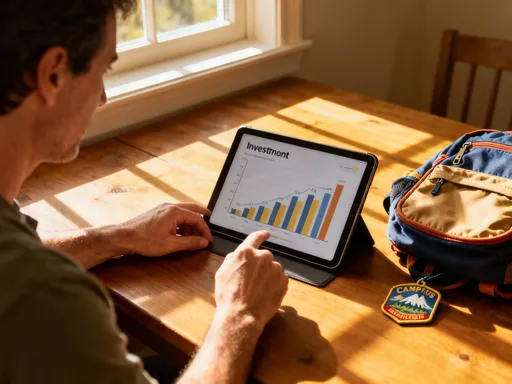
I began to think in terms of financial layers. The outer layer is long-term wealth—investments, retirement accounts, real estate. Important, yes, but not immediately useful in a crisis. The inner layer is liquidity—cash, accessible accounts, and tools that work when banks are closed or networks are down. This is the financial equivalent of a flashlight or a water filter: small, simple, but essential when everything else fails.
The key insight was this: financial resilience isn’t about having the most money. It’s about having the right kind of money, in the right place, at the right time. That means prioritizing access over returns, stability over speculation, and simplicity over complexity. It means accepting that some financial tools are designed for growth, while others are designed for survival. And in a crisis, survival comes first.
Building Your Financial Safety Net: Liquidity Over Returns
One of the biggest mistakes people make is chasing high returns on their emergency funds. They park money in stocks, real estate, or long-term CDs, thinking they’re being smart with their savings. But when disaster strikes, those assets are often locked, illiquid, or impossible to access quickly. I learned this the hard way. My high-yield savings account earned 3% annually—but it was useless without internet access.
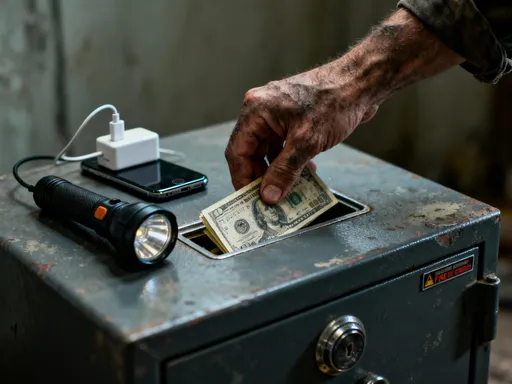
That’s why I now structure my emergency fund in tiers, based on accessibility and function. The first tier is physical cash—small bills, stored in a waterproof, fireproof container at home. Not a lot—enough to cover a week of essentials like food, fuel, and medicine. This is the financial equivalent of a flashlight battery: it doesn’t last forever, but it works when nothing else does.
The second tier is digital liquidity. I use a mobile payment app linked to a local credit union account. Unlike big banks, my credit union has a regional network that often stays online even when national systems fail. The app allows me to send money, pay bills, or withdraw cash without needing a branch. I keep a moderate balance here—enough to cover a month of expenses—and I ensure my phone is always charged with a portable power bank.
The third tier is local credit. I maintain a small, low-interest line of credit with a community bank. It’s not for spending—it’s for emergencies. I’ve tested it during minor outages to confirm it works when ATMs are down. This gives me a buffer if cash runs out and digital systems fail. The key is to use credit as a bridge, not a crutch—something to rely on temporarily, not a permanent solution.
Together, these layers create a financial safety net that’s functional even when traditional systems fail. The goal isn’t maximum return—it’s maximum availability. I accept that this money won’t grow fast. That’s the trade-off. But in a crisis, the ability to buy groceries or pay for repairs matters more than earning an extra 2% in interest.
Protecting Value: Asset Diversification That Survives Crises
When a disaster hits, not all assets are created equal. Real estate may be damaged. Stocks may plummet. Digital wallets may be inaccessible. That’s why I’ve learned to diversify not just across asset classes, but across forms of value that remain useful in crisis conditions.
One of the most important lessons was understanding portability. During the flood, I saw people carrying photo albums, jewelry, and tools in trash bags—items they could grab and go. I realized that some of my most valuable assets were fixed and immovable. That’s why I now keep a portion of my savings in portable, durable forms: gold coins, for example, or high-quality tools that can be traded or used if needed. These aren’t speculative bets—they’re practical backups.
I also pay close attention to insurance alignment. It’s not enough to have homeowner’s insurance. I’ve reviewed my policy to ensure it covers flood damage, power outage losses, and temporary relocation costs. I keep digital and physical copies of all documents in a secure, off-site location. This isn’t just about reimbursement—it’s about speed. The faster I can file a claim and receive funds, the sooner I can recover.
Geographic risk balancing is another key strategy. I used to have all my savings in one bank, all my investments in one market. Now, I spread my accounts across different institutions and regions. If one area is hit by a disaster, the others remain functional. This doesn’t mean chasing high-risk opportunities—it means reducing single points of failure.
Finally, I focus on low-volatility holdings for my emergency reserves. Instead of stocks or crypto, I use short-term Treasury bills and FDIC-insured accounts. These don’t offer explosive growth, but they’re stable, secure, and accessible. In a crisis, stability is more valuable than speculation. The goal isn’t to get rich—it’s to stay solvent.
Income Resilience: Earning Power When Systems Fail
Losing income during a disaster is one of the most stressful experiences a family can face. Without a paycheck, even a well-funded emergency account can drain quickly. That’s why I’ve worked to build income resilience—multiple streams of earning power that can function even when traditional jobs are disrupted.
My first step was developing remote skills. I took online courses in bookkeeping, virtual assistance, and digital organizing—services that can be offered from any location with internet. I didn’t do this to start a side business overnight. I did it to have options. When the storm hit, I couldn’t go to work, but I could help a local business clean up their records once power returned. That small job brought in enough to cover gas and groceries for a week.
I also explored low-infrastructure side hustles. Things like home gardening, baking, or repair work don’t require a corporate office or high-speed internet. During the recovery, I started selling homemade preserves at a community center. It wasn’t much, but it created cash flow when banks were closed. I learned that in a crisis, people value practical skills—cooking, fixing, building—more than abstract services.
Another key strategy is community-based earning. I’ve built relationships with neighbors, local shop owners, and service providers. When systems fail, barter and local trade often emerge. I’ve exchanged gardening help for eggs, repair work for firewood. These aren’t formal businesses—they’re informal networks of mutual support. But they keep money circulating and needs met when formal economies stall.
The lesson is clear: income resilience isn’t about having one job. It’s about having multiple ways to create value, even in difficult conditions. It’s about skills that are useful, not just profitable. And it’s about being ready to adapt—because in a crisis, the ability to earn, even a little, can make all the difference.
Risk Control: The Hidden Rules of Crisis Finance
Disasters don’t just create financial challenges—they create financial traps. In the aftermath of the storm, I saw neighbors sign up for high-interest loans to rebuild quickly. Others filed incomplete insurance claims and lost thousands. Some made emotional purchases—new furniture, appliances—before assessing real needs. I almost did the same.
That’s why I now follow a simple rule: pause before acting. In a crisis, the pressure to do something—anything—can be overwhelming. But hasty decisions often lead to long-term harm. Instead, I’ve created a checklist: verify information, assess real needs, consult trusted sources, and delay non-essential spending. This slows down the process, but it prevents costly mistakes.
I also pay close attention to official aid programs. After the flood, federal and state agencies offered assistance, but many people didn’t apply because they didn’t understand the process. I took the time to read the guidelines, gather documents, and submit a complete application. It took effort, but it resulted in a grant that helped cover temporary housing. The key was using aid wisely—not as a windfall, but as a targeted resource.
Another hidden risk is emotional spending. When stress is high, people often spend to feel in control. I’ve learned to separate needs from wants. A new couch might feel like progress, but food, water, and medical supplies come first. I use a simple prioritization system: survival, stability, then restoration. This keeps me focused on what truly matters.
Finally, I resist the pressure to rebuild too fast. Insurance payouts can create a false sense of financial security. But spending everything at once leaves no buffer for surprises. I now allocate funds in phases: immediate needs first, then structural repairs, then improvements. This creates a sustainable recovery path, not a short-term burst followed by debt.
Making It Systematic: Your Step-by-Step Financial Defense Plan
After my experience, I realized that financial preparedness shouldn’t be reactive. It should be systematic. So I built a personal financial emergency protocol—a clear, actionable plan that guides me before, during, and after a crisis. It’s not perfect, but it’s reliable.
Six months before peak disaster season, I review my emergency fund. I ensure my cash reserves are up to date, my digital accounts are accessible, and my credit lines are active. I check my insurance policies and update contact lists. I also run a financial stress test: What if I lost income for a month? What if the power was out for a week? This helps me identify gaps.
One week before a potential threat—like a hurricane watch—I take concrete steps. I withdraw small bills and store them securely. I charge all devices and power banks. I print essential documents: account numbers, policy details, emergency contacts. I confirm that my family knows where everything is and what to do.
During the event, I follow a simple rule: conserve and assess. I avoid spending unless absolutely necessary. I document damage with photos and notes. I wait for official information before making decisions. This prevents panic-driven choices and preserves resources.
After the crisis, I follow a recovery timeline. First, I address immediate needs: food, water, shelter. Then, I file insurance claims with complete documentation. I apply for aid if eligible. I reconnect with income sources—remote work, side gigs, community support. And I review what worked and what didn’t, updating my plan for next time.
This system doesn’t guarantee a perfect outcome. But it turns chaos into clarity. It replaces fear with action. And it ensures that when disaster strikes, I’m not starting from zero—I’m building on a foundation I’ve already laid.
True financial strength isn’t measured by wealth during calm times, but by stability in chaos. By treating money like emergency gear—tested, accessible, and reliable—you gain more than security. You gain peace of mind. The skills you build today don’t just protect against disasters—they transform how you live with money every day. You become more intentional, more resilient, more in control. And that’s a legacy worth building.